
Why Climb Everest at Night? The Complete Guide

 Kedar Neupane
3rd Dec, 2025
Kedar Neupane
3rd Dec, 2025
Kedar Neupane
I am Kedar Neupane, a passionate traveler, entrepreneur, mentor, and social contributor, born and raised in a village near the Nepal-China border in Sindhupalchok, Nepal. With a Master’s degree in Business from Tribhuvan University and Level 2 proficiency in the German language, I have dedicated my life to tourism, trade, mentorship, and holistic well-being.
🌍 A Global Explorer with a Vision
Having explored 26+ countries, I have gained profound insights into diverse cultures, business landscapes, and global tourism. My travels have taken me to:
🇹🇭 Thailand | 🇧🇹 Bhutan | 🇲🇾 Malaysia | 🇸🇬 Singapore | 🇨🇳 China | 🇭🇰 Hong Kong | 🇩🇪 Germany | 🇵🇱 Poland | 🇦🇹 Austria | 🇨🇭 Switzerland | 🇭🇺 Hungary | 🇳🇱 Netherlands | 🇧🇪 Belgium | 🇫🇷 France | 🇦🇪 UAE | 🇬🇧 UK | 🇺🇸 USA | 🇹🇷 Turkey | 🇶🇦 Qatar | 🇮🇳 India | 🇮🇩 Indonesia | 🇨🇦 Canada
Through my journeys, I have developed a deep appreciation for cultural exchange, adventure tourism, and sustainable business practices.
🏔️ Entrepreneurial & Professional Journey
I am actively involved in tourism, trade, and mentorship, leading multiple ventures that promote sustainable travel, adventure tourism, and business development:
✔ Founder & MD – Actual Adventure Pvt. Ltd. (A leading adventure travel company in Nepal)
✔ CEO – Himalayas Destination Management Company (Creating premium travel experiences)
✔ MD – Nepal Export & Import Pvt. Ltd. (Promoting Nepalese products globally)
✔ MD – Actual Mentor Pvt. Ltd. (Empowering entrepreneurs and professionals)
✔ Chairman – World Expedition Nepal (Focusing on high-altitude expeditions and trekking)
Through my entrepreneurial journey, social contributions, global explorations, and commitment to lifelong learning, I strive to inspire others to pursue their passions while making a meaningful difference. My dream is to build a world where travel, business, and holistic well-being come together, fostering growth, sustainability, and happiness for all.
Updated for: 2025 Climbing Season
Climbing Mount Everest is the ultimate mountaineering achievement, and the final summit push is the most critical moment of the expedition. What surprises many people is that climbers begin this push late at night — usually between 8:00 PM and 2:00 AM. This is not accidental. Decades of mountaineering experience, Sherpa expertise, and scientific understanding have proven that night climbing dramatically increases safety and success rates. This blog explains in detail why climbers choose the darkness for the most important ascent of their lives.
Table of Contents
1. To Reach the Summit at the Safest Time
Climbers aim to stand on the summit between 6:30 AM and 10:00 AM. Morning weather is relatively stable, winds are calmer, and visibility is excellent. Snow remains frozen, minimizing avalanche and collapse risk. Climbing at night makes sure climbers arrive at the summit during the safest possible window.
2. Avoiding Afternoon Weather Hazards
Everest is notorious for dangerous afternoon weather. Winds increase, clouds build up, and sudden storms can appear. Climbers who summit in the morning are already descending when afternoon storms arrive, giving them a much safer experience.
3. Nighttime Cold Makes the Mountain Stable
Night temperatures can drop below -30°C to -40°C, making snow and ice firmer. This provides safer footing and reduces the risk of soft snow collapses, crevasses widening, or icefall movements. A colder mountain is a safer mountain.
4. To Avoid Traffic Jams on the Hillary Step
Climbers queue at bottleneck areas like the South Summit and Hillary Step. Long waiting times in the “death zone” above 8,000 meters are extremely dangerous. Beginning early ensures high-altitude sections are crossed before crowds build.
5. Better Oxygen Efficiency at Night
Supplemental oxygen is limited. Cooler nighttime temperatures reduce the climber’s oxygen consumption rate. With fewer climbers on the route, there is also less wasted oxygen from long stops or traffic delays.
6. More Stable Ice on Technical Sections
Technical areas such as the Balcony and the summit ridge become firmer at night. Crampons grip better, making the final ascent more secure and efficient.
7. Sunrise Motivation and Clear Visibility
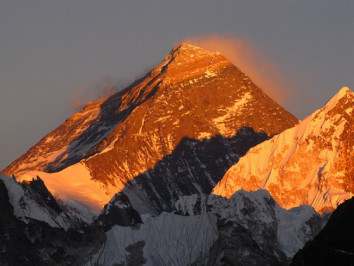
Reaching high sections around dawn provides a massive psychological boost. The view of the Himalayas awakening beneath the glowing sunrise is often called the most magical moment of the climb.
8. Lower Winds at Night
Nights and early mornings offer calmer winds at high altitude. Once the sun rises fully, winds can escalate dangerously. Night climbing takes advantage of this natural calm period.
9. Avoiding Melting Ice and Rockfall
Daytime sunlight weakens ice formations, making avalanches and rockfall more likely. Climbers aim to finish technical areas early, before the mountain becomes unstable in the midday heat.
10. Proven Sherpa Strategy
Sherpa mountaineers have guided climbers for decades. Their experience shows that night climbing produces the highest success rate with the lowest risk. The modern Everest climbing schedule is based on generations of their trusted wisdom.
Conclusion
Climbing Everest at night provides the safest, most efficient, and most reliable path to the summit. Nearly every successful expedition follows this timing because it aligns perfectly with weather patterns, oxygen management, traffic flow, and mountain stability. For climbers dreaming of reaching the top of the world, the journey under the stars offers the best chance of success.
© 2025 Written by Kedar Neupane — Actual Adventure Pvt. Ltd.
Recent Posts


3rd Dec, 2025

19th Nov, 2025
19th Nov, 2025


27th Oct, 2025

28th Aug, 2025


.jpeg)