Annapurna Base Camp (ABC) Trek Vs Everest Base camp Trek

 Kedar Neupane
1st Dec, 2025
Kedar Neupane
1st Dec, 2025
Kedar Neupane
I am Kedar Neupane, a passionate traveler, entrepreneur, mentor, and social contributor, born and raised in a village near the Nepal-China border in Sindhupalchok, Nepal. With a Master’s degree in Business from Tribhuvan University and Level 2 proficiency in the German language, I have dedicated my life to tourism, trade, mentorship, and holistic well-being.
🌍 A Global Explorer with a Vision
Having explored 26+ countries, I have gained profound insights into diverse cultures, business landscapes, and global tourism. My travels have taken me to:
🇹🇭 Thailand | 🇧🇹 Bhutan | 🇲🇾 Malaysia | 🇸🇬 Singapore | 🇨🇳 China | 🇭🇰 Hong Kong | 🇩🇪 Germany | 🇵🇱 Poland | 🇦🇹 Austria | 🇨🇭 Switzerland | 🇭🇺 Hungary | 🇳🇱 Netherlands | 🇧🇪 Belgium | 🇫🇷 France | 🇦🇪 UAE | 🇬🇧 UK | 🇺🇸 USA | 🇹🇷 Turkey | 🇶🇦 Qatar | 🇮🇳 India | 🇮🇩 Indonesia | 🇨🇦 Canada
Through my journeys, I have developed a deep appreciation for cultural exchange, adventure tourism, and sustainable business practices.
🏔️ Entrepreneurial & Professional Journey
I am actively involved in tourism, trade, and mentorship, leading multiple ventures that promote sustainable travel, adventure tourism, and business development:
✔ Founder & MD – Actual Adventure Pvt. Ltd. (A leading adventure travel company in Nepal)
✔ CEO – Himalayas Destination Management Company (Creating premium travel experiences)
✔ MD – Nepal Export & Import Pvt. Ltd. (Promoting Nepalese products globally)
✔ MD – Actual Mentor Pvt. Ltd. (Empowering entrepreneurs and professionals)
✔ Chairman – World Expedition Nepal (Focusing on high-altitude expeditions and trekking)
Through my entrepreneurial journey, social contributions, global explorations, and commitment to lifelong learning, I strive to inspire others to pursue their passions while making a meaningful difference. My dream is to build a world where travel, business, and holistic well-being come together, fostering growth, sustainability, and happiness for all.
Overview — What is the Annapurna Base Camp (ABC) Trek?
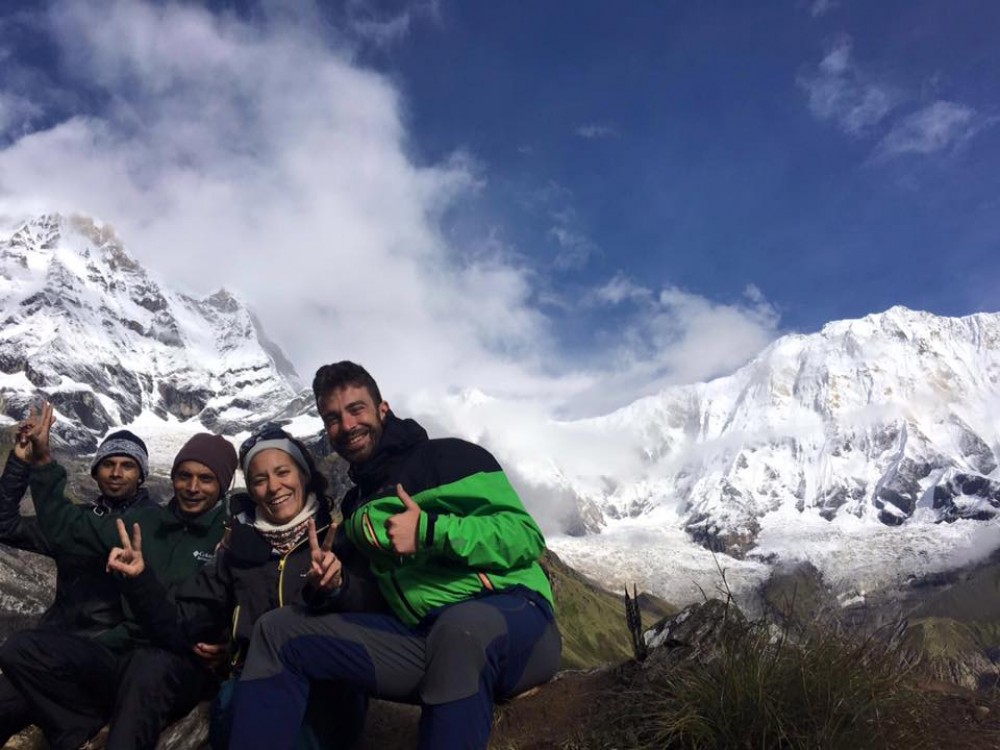
The Annapurna Base Camp trek (ABC) takes you into the Annapurna Sanctuary — a dramatic bowl surrounded by towering peaks such as Annapurna I (8,091m), Annapurna South, Hiunchuli, Gangapurna and Machhapuchhre (Fishtail). It is famous for its variety of landscapes, teahouse lodges, and relatively short duration compared with many high-altitude treks.
Table of Contents
Quick facts
 How long is the trek to Annapurna Base Camp?
The trek can be completed in 7–12 days, depending on your pace, route, and whether you add acclimatization days or side visits like Poon Hill or Ghorepani.
Common itineraries
- Short ABC (7 days): Fast pace, starting from Nayapul or Tikhedhunga.
- Standard ABC (9–10 days): Balanced pace with a comfortable ascent and descent.
- Relaxed ABC + Poon Hill (11–14 days): Adds Poon Hill and rest days for acclimatization and panoramic sunrise views.
Can beginners do Annapurna Base Camp?
Yes — ABC is one of Nepal’s most beginner-friendly Himalayan treks. That said, successful completion requires:
- Basic cardio fitness (able to walk 4–6 hours/day)
- Stair/hill training or long weekend hikes before departure
- Comfort with uneven stone paths and multiple stair sections
- Good boots, layered clothing and proper hydration
How difficult is ABC & what level of fitness is needed?
Difficulty: Moderate. The trek features long stone staircases, steady climbs, and daily walking of 4–7 hours.
Fitness checklist
- Can walk 10–15 km with elevation gain for several consecutive days
- Comfortable standing and walking on uneven surfaces
- Cardio training recommended: hiking, stair climbing, cycling or jogging for 4–6 weeks pre-trek
Typical on-trail day
Expect 4–6 hours of trekking on mixed terrain: forest trails, stone steps, occasional muddy sections, and some steep stretches near the Sanctuary.
How much does it cost to trek Annapurna Base Camp?
The total cost varies depending on style (budget vs. guided luxury). Below is a practical breakdown to help plan.
| Item | Budget estimate (USD) | Notes |
|---|---|---|
| Tea-house package (per person, 7–10 days) | 450–900 | Depends on included guide, porter and accommodation standard |
| Permits (ACAP + TIMS) | ~50 | ACAP permit ~$30, TIMS ~ $20 (subject to official changes) |
| Meals & hot drinks (on trail) | 25–35 / day | Tea-house pricing rises with altitude |
| Porter (optional) | 20–25 / day | Porters carry up to 20–25 kg in most companies |
| Sleeping bag rental | 1–3 / day | Available in Pokhara/near trailheads |
| Helicopter (shared) | 350–500 per leg | Pokhara ↔ ABC (sharing) — price fluctuates by season |
| Flight (Kathmandu–Pokhara) | 90–150 | Domestic flight or tourist bus (cheaper) |
These are sample figures—always check current permit fees and helicopter rates when planning.
Helicopter to base camp — how much?
Helicopter rides are useful for saving time or exiting due to weather/health. Typical market ranges:
- Shared helicopter (per person): USD 350–500 per leg (e.g., Pokhara ↔ ABC) depending on season and passenger numbers.
- Private charter (one flight): USD 2,400–3,500 (depends on aircraft, route, landing fees and fuel).
Note: Helicopter landing availability at ABC depends on weather and local regulations; operators may land at nearby lower altitudes (MBC/recce points) rather than exactly at the Sanctuary in some conditions.
10-Day Sample Itinerary — Annapurna Base Camp
This is a balanced 10-day itinerary starting from Pokhara.
| Day | Route | Notes |
|---|---|---|
| Day 1 | Drive/flight Pokhara → Nayapul → Trek to Tikhedhunga/Nayapul | 1–3 hours trekking; easy start |
| Day 2 | Tikhedhunga → Ghorepani | Steep ascent; optional Poon Hill early next |
| Day 3 | Early sunrise at Poon Hill → Tadapani | Panoramic views; moderate day |
| Day 4 | Tadapani → Chomrong | Drop into Modi Khola valley; acclimatization |
| Day 5 | Chomrong → Dovan/Bamboo | Bridge crossings and rhododendron forest |
| Day 6 | Dovan/Bamboo → Deurali → Machhapuchhre Base Camp (MBC) | Follow Modi Khola upstream; prepare for Sanctuary |
| Day 7 | MBC → Annapurna Base Camp (ABC) | Arrive at 4,130 m; celebrate sunrise & views |
| Day 8 | ABC → Bamboo/Chomrong | Begin descent; easier walking but long day |
| Day 9 | Chomrong → Jhinu Danda/Pokhara | Relax in hot springs option (Jhinu) |
| Day 10 | Drive/transfer back to Pokhara | Rest and post-trek recovery day |
Swap days or add rest/acclimatization days as required by fitness and weather.
Which is better — EBC or ABC?
Annapurna Base Camp (ABC)
- Duration: 7–12 days
- Max altitude: 4,130 m
- Difficulty: Moderate
- Best for: Short trips, beginners, varied scenery
Everest Base Camp (EBC)
- Duration: 12–14+ days
- Max altitude: 5,364 m (Gorak Shep) / higher for Kala Patthar
- Difficulty: Harder (higher altitude)
- Best for: High-altitude experience, Everest views
Key decision points
- Choose ABC if time is limited or you're newer to altitude trekking.
- Choose EBC if you want a greater altitude challenge and the emotional draw of Everest.
Can you see Everest from Annapurna Base Camp?
No. The Annapurna Sanctuary and Everest (Khumbu) are in different regions of Nepal. From ABC you will see nearby giants like Annapurna I, Annapurna South, Machhapuchhre, Hiunchuli and Gangapurna. Everest is far to the east and not visible from ABC.
Do I need a sleeping bag for Annapurna Base Camp?
Yes, strongly recommended. Tea-houses provide blankets which may not be warm enough at higher altitudes and cold nights. Recommended rating: -10°C to -15°C. Renting in Pokhara or Kathmandu is possible, but bring your own for assured hygiene and fit.
What is the cheapest trek in Nepal?
Short, low-permit treks are cheapest. Examples:
- Poon Hill (Ghorepani) — 3–4 days
- Mardi Himal — 4–5 days
- Ghorepani Circular — 4–6 days
Costs vary with group size, guide/porter use, and season.
Is Camp 4 in the Death Zone?
Yes — on Mount Everest, Camp 4 (around 7,900–8,000 m) is inside the Death Zone where oxygen levels are insufficient for long survival. This is relevant to Everest expeditions, not to ABC.
What is the difference between Annapurna I, II and III?
Short differences:
- Annapurna I — 8,091 m (the 10th highest mountain). Extremely challenging and historically high fatality rate on expeditions.
- Annapurna II — 7,937 m. Located to the north/east in the massif; technical and less frequently climbed.
- Annapurna III — 7,555 m. Technical; sits within the massif and forms complex ridges.
These peaks differ in height, technical routes and exposure; they are separate climbing objectives and not the same as the base camp visited by trekkers.
What is the 2 PM rule in Everest?
The 2 PM rule is a common safety guideline used on Everest summit pushes: if climbers have not reached the summit by 2:00 PM local time, they should turn back to avoid descending in dangerous afternoon weather and darkness. This rule is a life-saving decision standard used by many expedition leaders.
Is EBC harder than Kilimanjaro?
Both have different challenges:
- Everest Base Camp (EBC) — longer, higher altitudes over multiple days, requires more sustained trekking and acclimatization.
- Kilimanjaro — higher single summit (5,895 m), shorter timeframe (usually 6–9 days), steep altitude gain. Requires acclimatization strategy but offers easier logistics (guides/porters carry most gear).
Generally, many consider EBC "harder" due to the length, remoteness and cumulative altitude exposure, while Kilimanjaro is more intense in a short period due to rapid ascent.
Practical Trekking Tips for ABC
- Book permits (ACAP + TIMS) in Pokhara or via operator before departure.
- Carry cash (Nepalese rupees) — few ATMs on trail; Pokhara is best supply point.
- Shoes: broken-in hiking boots with ankle support; bring good socks and gaiters.
- Clothing: layering system — base layer, insulating midlayer, waterproof shell.
- Altitude: ascend slowly, hydrate, watch for AMS signs (headache, nausea). Add rest days if needed.
- Insurance: ensure it covers high-altitude trekking and helicopter evacuation.
- Respect local culture and mountains — follow trail etiquette and carry out litter.
Frequently Asked Questions — Extended
How many days is ABC?
Between 7 and 12 days depending on starting point and pace; standard comfortable itineraries are 9–10 days.
Do I need a guide for Annapurna Base Camp?
No, you can trek independently on well-marked routes, but hiring a guide is highly recommended for first-timers for safety, local knowledge, and logistics.
What is the cheapest way to get to Pokhara from Kathmandu?
Tourist bus (6–8 hours) is cheapest (~$6–15). Domestic flights are quicker (~25 minutes) but cost more (~$90–150 depending on season).
How cold does it get at ABC?
Nights at ABC (4,130 m) can drop below -10°C in winter. In the trekking seasons (spring/autumn), nights may be around -5°C to -12°C; days are sunnier and much warmer when the sun is out.
Is Annapurna Base Camp trek seasonal?
Primary trekking seasons are spring (Mar–May) and autumn (Sep–Nov). Winter (Dec–Feb) is colder with snow; monsoon (Jun–Aug) has heavy rain and leeches in lower forested sections.
How many toilets are available on the trail?
Tea-houses provide western and squat toilets; expect to pay a small fee and carry some toilet paper. At higher tea houses, facilities are more limited and less consistent.
Quick Links
- Overview
- How long
- Beginners
- Fitness
- Cost breakdown
- Helicopter
- Sample itinerary
- ABC vs EBC
- Sleeping bag
- FAQs
Annapurna Base Camp ABC trek cost EBC vs ABC ABC itinerary helicopter to base camp
| Style | Typical cost (USD) |
|---|---|
| Budget | 450–650 |
| Standard (guide + porter) | 700–900 |
| Comfort / Private | 1200–1800+ |
Prices approximate — depends on group size, services and season.
Safety & Health
- Check travel & medical insurance for high-altitude coverage.
- Carry basic altitude medication (consult doctor).
- Bring sunscreen, sunglasses, and a hat.
- Eat and drink regularly — salty snacks help retain fluids.
Author
Kedar Neupane — Local trekking writer and operator with experience in Nepal's Annapurna and Everest regions.
Author's Notes & Suggested Next Steps
If you plan to publish this article on a travel/trekking website, consider:
- Adding high-quality photos for each section (Poon Hill sunrise, Machhapuchhre view, ABC sunrise).
- Embedding a downloadable packing checklist PDF and a printable itinerary.
- Including up-to-date permit fees and helicopter operator contact numbers before publishing (these fees can change).
- Localize currency amounts (e.g., NPR) for Nepali readers and include a sample budget converted to common currencies.
© 2025 — Annapurna Base Camp Guide · For personalized itineraries or group packages, contact Actual Adventure. Disclaimer: Permit fees, helicopter rates and some operational details change frequently — verify before booking.
Recent Posts

8th Feb, 2026

6th Feb, 2026




17th Dec, 2025