
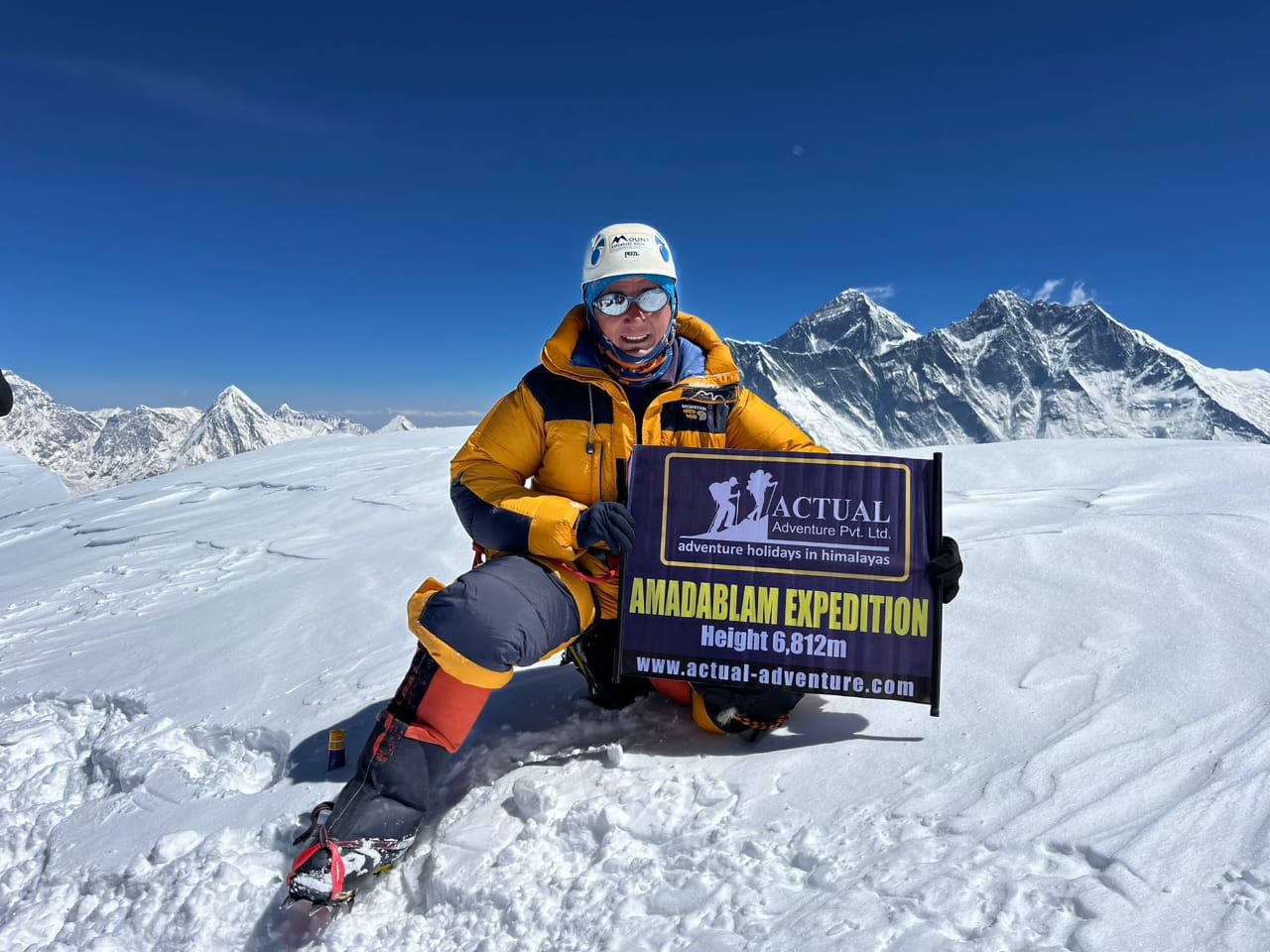
Ama Dablam (6,812m) is one of the most iconic peaks in Nepal, known for its technical climbing challenges and breathtaking views. At Actual Adventure Pvt. Ltd., we offer a fully guided Ama Dablam Expedition 2025 with experienced Sherpas, professional logistics, and top-notch safety measures.
Ama Dablam (6,812m) is one of the most iconic peaks in Nepal, known for its technical climbing challenges and breathtaking views. At Actual Adventure Pvt. Ltd., we offer a fully guided Ama Dablam Expedition 2025 with experienced Sherpas, professional logistics, and top-notch safety measures.
Nestled in the heart of the Khumbu region of Nepal, Ama Dablam stands as one of the most iconic and breathtaking peaks of the Himalayas. Its name, Ama Dablam, translates to "Mother's Necklace," representing the mountain's elegant and graceful appearance. An Ama Dablam Expedition offers adventurers a unique opportunity to challenge themselves on one of the world's most stunning and technically demanding peaks. This comprehensive guide will provide you with an overview of what to expect from this expedition, including the package details, itinerary, costs, difficulties, best season, route, permit management, and valuable suggestions for newcomers.
| Mountain | Ama Dablam (6,812 m / 22,349 ft), Khumbu, Nepal |
|---|---|
| Standard Route | Southwest Ridge (SW Ridge) |
| Trip Length | 27–30 days (typical). Summit window ~5–7 days |
| Climbing Grade | AD+/D- (alpine); sections up to ~5.7 (UIAA IV+/V-) & 60–70° ice/snow |
| Ideal Season | Pre-monsoon (Apr–May) & Post-monsoon (Oct–Nov) |
| Team Size | 2–10 climbers (small, guided teams recommended) |
| Eligibility | Solid alpine experience (multi-pitch rock up to 5.7 in boots, fixed lines, jumaring, crampon work) |
| Permits | Sagarmatha National Park permit, Khumbu Pasang Lhamu Rural Municipality fee, Expedition permit (DoT) |
| Accommodation | Teahouses on the trek; tents at BC/C1–C3 |
| Emergency | BC radio/satphone; helicopter evacuation when weather allows |
Note: Regulations, fees and logistics can change. We confirm all details during booking.
| Days | 27–30 total: Kathmandu (prep) → Lukla → Namche → Pangboche → Ama Dablam BC → Rotations (C1–C2) → Summit push → Return trek → Kathmandu |
|---|---|
| Key Camps | Base Camp (~4,600 m), Camp 1 (~5,700 m), Camp 2 (~6,000 m), Camp 2.7/3 (~6,300–6,400 m) |
| Rotation Plan | Carry to C1 → Sleep C1; carry to C2 → Sleep C1/C2; rest at BC; summit window when forecast aligns |
| Acclimatization Add-ons | Nangkartsang Peak / Chukhung Ri acclimatization; (optional) Lobuche East as pre-exped objective |
| Start | Kathmandu (1,350 m) → Flight to Lukla (2,860 m) |
|---|---|
| Approach Trek | Lukla → Phakding → Namche (3,440 m) → Tengboche → Pangboche (3,985 m) → Ama Dablam BC (~4,600 m) |
| Summit | 6,812 m via SW Ridge (fixed lines used on steep rock/ice sections) |
| Descent | Via the same route with multiple rappels (fixed stations during season) |
| Expedition Permit | Issued by the Department of Tourism (DoT), Nepal; leader & Sirdar registered; liaison officer as per rules. |
|---|---|
| Sagarmatha NP | Park entry permit required for all members & staff. |
| Local Fee | Khumbu Pasang Lhamu Rural Municipality entry fee payable on trek. |
| Environmental | Garbage deposit & waste management plan at BC; carry-in carry-out protocols apply. |
| Insurance | Mandatory rescue/medical insurance for climbers & staff (helicopter evacuation included). |
We process all permits and formalities on your behalf.
| Guiding Ratio | 1 IFMGA/NMA guide per 2–3 climbers (summit ratio may be 1:1 on push day) |
|---|---|
| Climbing Sherpa | Personal Sherpa support for load carries & summit assistance |
| Porters/Yaks | For BC transports; weight limits apply (duffel system) |
| Communications | BC radio, satellite phone; optional personal trackers |
| Meals | Teahouse meals on trek; expedition chef at BC; high-alt rations at C1–C3 |
| Water | Boiled/filtered at BC; purification advised above |
| Power | Solar/Generator at BC (for charging cameras, radios, sat devices) |
| Hazards | Rock/ice fall (esp. between C2–C3), exposure, altitude illness, weather/wind |
|---|---|
| Mitigation | Conservative forecasts, fixed-line integrity checks, helmets always, staged rotations |
| Medical | BC medical kit, pulse oximeter; guides trained in WFR; O2 and PAC bag on request |
| Evacuation | Helicopter from BC/lower camps when feasible; ground support to nearest LZ |
| Briefings | Daily guide briefing, route status, weather, turnaround times |
| Base | 4–6 hrs/week aerobic (hikes with load, stair climbs); mobility 2×/week |
|---|---|
| Strength | 2–3 sessions/week (legs, posterior chain, core, grip) |
| Technical | Rock mileage in mountaineering boots; fixed-line & rappel practice |
| Altitude | Weekend climbs/treks at elevation if possible; heat/cold exposure prep |
Group gear (tents, ropes, anchors, kitchen, medical, comms) provided by Actual Adventure unless specified.
| Mar–Apr | Cold mornings, improving stability; increasing summit attempts from mid-April. |
|---|---|
| May | Warmer but wind can spike; late pre-monsoon attempts. |
| Jun–Sep | Monsoon season—poor visibility, avalanches; expeditions uncommon. |
| Oct | Prime conditions: settled weather, colder nights, good visibility. |
| Nov | Still excellent; progressively colder, shorter days. |
| Dec–Feb | Harsh winter—very cold, high winds; limited operations. |
| Lead Time | We recommend securing dates 3–6 months ahead for Oct–Nov and Apr–May. |
|---|---|
| Documents | Passport (6+ months validity), insurance certificate, medical disclosure, skills log (on request). |
| Custom Options | Private teams, 1:1 summit support, pre-exped training day in Kathmandu, Lobuche East add-on. |
| Sustainability | Leave No Trace practices, local staffing, waste segregation & carry-out policy. |
Ready to plan? Contact Actual Adventure for current availability, pricing, and a day-by-day tailored itinerary.
The Ama Dablam climbing route follows the Southwest Ridge, featuring steep rock, ice, and mixed climbing sections. Fixed rope sections assist in technical areas, but climbers should have previous experience in high-altitude mountaineering. The Ama Dablam climbing difficulty is rated as technically challenging, requiring strong fitness and rock/ice climbing skills.
The Ama Dablam Expedition price varies depending on the package and services chosen. Our full-service expedition includes:
Contact us for a customized Ama Dablam expedition package based on your needs.
The best time to climb Ama Dablam is during spring (April-May) and autumn (October-November) when weather conditions are most favorable.
If you're ready to climb Ama Dablam with a trusted operator, Actual Adventure Pvt. Ltd. is here to make your journey safe, successful, and unforgettable. Contact us for detailed information on Ama Dablam expedition preparation, climbing gear list, and pricing.
Our Ama Dablam Expedition package is carefully designed to provide an unforgettable and safe mountaineering experience. Here's what you can expect:
Expert Guidance
Our team of experienced mountaineers and Sherpas will guide you throughout the expedition, ensuring your safety and success.
Well-Planned Itinerary
Our 30-day itinerary is thoughtfully designed to acclimatize you to the high altitudes and allow you to ascend Ama Dablam gradually.
World-Class Equipment
We provide top-quality gear and equipment to ensure your comfort and safety during the expedition.
Accommodation
Stay in comfortable lodges and tents along the trekking route and in base camp, guaranteeing a comfortable and enjoyable experience.
Delicious Meals
Savor a variety of nutritious and delicious meals prepared by our experienced cooks.
Permit Management
Our team will take care of all the necessary permits and paperwork, so you can focus on your adventure.
Cultural Experience
Immerse yourself in the rich Sherpa culture and explore the picturesque villages along the way.
Safety Measures
We prioritize your safety with comprehensive risk assessment and emergency response plans.
Our Ama Dablam Expedition package is ideal for:
Experienced Climbers
Those with previous high-altitude mountaineering experience looking to conquer an iconic peak.
Adventurous Individuals
Enthusiasts seeking a challenging yet rewarding experience in the Himalayas.
Outdoor Enthusiasts
Nature lovers who want to explore the stunning Khumbu region.
Team Building
Corporate groups looking for a unique team-building adventure.
Photography Enthusiasts
Photographers wanting to capture the breathtaking landscapes and culture of the Khumbu region.
The Ama Dablam Expedition offers several highlights:
Ama Dablam Summit
The ultimate achievement is standing on the summit of this remarkable peak at 6,812 meters, providing breathtaking views of Everest, Lhotse, and Makalu.
Technical Climbing
Ama Dablam presents various technical climbing challenges, including rock, ice, and mixed climbing.
Cultural Experience
Explore Sherpa villages, and monasteries, and immerse yourself in the local way of life.
Khumbu Region
Witness the unparalleled beauty of the Khumbu region with its stunning landscapes and diverse wildlife.
Everest Base Camp
You'll visit the iconic Everest Base Camp, a pilgrimage site for mountaineers worldwide.
The cost of the Ama Dablam Expedition package varies depending on several factors, including group size, services requested, and the level of support required. We estimate the package cost of 5200-6000 USD for the Ama Dablam Expedition. Please contact us for a customized quote tailored to your specific needs.
The Ama Dablam Expedition is considered a technically challenging climb due to the following difficulties:
Ama Dablam involves rock, ice, and mixed climbing, requiring solid technical skills and experience.
The high altitude poses potential risks, including altitude sickness, which requires proper acclimatization.
The unpredictable Himalayan weather can disrupt plans and pose a significant challenge.
The expedition demands peak physical fitness and mental resilience.
Being in a remote area, medical assistance may not be readily available in case of emergencies.
The ideal time for the Ama Dablam Expedition is during the pre-monsoon (spring) and post-monsoon (autumn) seasons:
Offers stable weather, clear skies, and better climbing conditions.
Provides favorable weather and stunning views, making it the most popular climbing season.
The standard route for Ama Dablam Expedition is the Southwest Ridge. This route offers a mix of rock and ice climbing, along with several technical sections. Climbers ascend through camps 1 and 2 before reaching the summit. The route is known for its aesthetic beauty and its challenging technical aspects, making it a popular choice for mountaineers.
As part of our expedition package, we handle all necessary permit applications, including the following:
Our experienced team will ensure that all permits are obtained promptly and efficiently, allowing you to focus on your adventure.
For those new to high-altitude mountaineering, here are some valuable suggestions:
Prioritize physical and mental conditioning with a focus on cardiovascular and strength training.
Acquire basic mountaineering skills, including rope work, ice and rock climbing techniques, and crevasse rescue.
Follow a proper acclimatization schedule to reduce the risk of altitude sickness.
Consider hiring an experienced guide or joining a guided expedition for your first Himalayan climb.
Invest in quality mountaineering gear and clothing to ensure your safety and comfort.
Develop mental toughness to cope with the physical and psychological challenges of high-altitude climbing.
Elevate your climbing experience by joining one of our group expeditions planned for 2025. At Actual Adventure, we believe in the power of camaraderie, shared knowledge, and mutual support. Joining a group not only enriches your journey but also weaves enduring bonds, making the summiting of Ama Dablam a truly unforgettable experience.
With Actual Adventure as your trusted companion, venture into the mystical landscapes of the Himalaya and rise to the challenge of ascending Ama Dablam. Our meticulous planning, permit acquisition expertise, and group joining options for 2024 are designed to provide you with a seamless and enriching adventure, as you etch your name in the annals of mountaineering history, atop the 'Mother’s Jewel Box'.
Embarking on an Ama Dablam Expedition is a dream come true for many mountaineers and adventure enthusiasts. The journey promises not only the thrill of conquering a majestic peak but also an immersive cultural experience in the heart of the Himalayas. With careful planning, expert guidance, and dedication, you can make this challenging expedition a reality.
Contact us to start your Ama Dablam adventure and create lasting memories of a lifetime.
Arrival at Tribhuvan International Airport in Kathmandu
Upon your arrival at the Tribhuvan International Airport in Kathmandu, you will be warmly welcomed by our experienced team. They will assist you with the immigration and baggage clearance processes, ensuring a smooth transition through the airport.
Tranfer to Hotel
After this, you will be transported to a comfortable hotel where you can relax and unwind after your journey. The hotel is thoughtfully selected to provide you with a pleasant and comfortable stay in the heart of Kathmandu. You can settle into your room, freshen up, and take some time to rest.
Evening Dinner after exploring city
It offers a blend of modern amenities and historical treasures. While staying at the hotel, you'll have the opportunity to explore the city's unique atmosphere. In the evening, you will savor delicious Nepali cuisine at local restaurants.
Overnight sstay in Kathmandu
Your overnight stay at the hotel will provide you with the perfect start to your Nepal adventure.
Permit Issue and Document Preparation
Before embarking on your expedition, there are essential administrative tasks that need to be completed. This stage includes permit issuance and document preparation.
Permit Issue
Your adventure in the Himalayas requires specific permits, such as the Sagarmatha National Park Entry Permit and the Khumbu Pasang Lhamu Rural Municipality Entry Permit. Our experienced team will handle all the necessary paperwork to secure these permits for you.
Document Preparation
Apart from permits, various documents need to be in order for your expedition. This includes passport copies, visa arrangements, and any other legal requirements. Our team will assist you in making sure that all the necessary documents are in place.
Last-Minute Shopping and Briefing
As you prepare to venture into the Himalayas, it's essential to ensure you have all the necessary gear and equipment. At this stage, you may need to do some last-minute shopping to fill any gaps in your gear list.
Shopping:
If you require any additional equipment or gear, you can take this opportunity to explore the local markets in Kathmandu, known for offering a wide range of mountaineering and trekking gear.
Briefing:
Before setting out on your expedition, our team will provide you with a comprehensive briefing. During this session, you'll receive detailed information about the upcoming journey, including the itinerary, safety guidelines, and important do's and don'ts.
Overnight Stay in Kathmandu
After a day of permit issuance, document preparation, last-minute shopping, and the informative briefing, you will return to your comfortable hotel in Kathmandu for an overnight stay.
Fly to Lukla and Trek to Phakding
Your journey into the Khumbu region of the Himalayas begins with an exhilarating flight from Kathmandu to Lukla, a short 30-minute journey. The flight offers spectacular views of the Himalayan peaks, providing a taste of the breathtaking scenery that awaits you.
Arrival at Lukla Airport
Upon landing in Lukla, you'll be greeted by the cool mountain air and the awe-inspiring surroundings.
Trek to Phakding
From Lukla, your trek to Phakding begins, the trail winds its way through picturesque Sherpa villages, offering a glimpse into the local culture and way of life.
As you descend gradually, you'll follow the Dudh Koshi River, crossing suspension bridges that sway gently over the rushing water. The sound of the river and the chirping of birds create a soothing backdrop to your trek.
Lunch time
You will have your lunch at teahouse along the way.
Arrival at Phakding
After 4-5 hours of trek, you will reach at Phakding where your guide will chose the hotel for accommodation and settle you there for tonight. The village is surrounded by lush rhododendron and pine forests, providing a serene and peaceful atmosphere.
Overnight stay in Phakding
You'll have the opportunity to rest, enjoy a warm meal, and appreciate the simplicity and beauty of life in the Himalayas.
As you settle into your lodge in Phakding, you'll likely feel a sense of excitement and anticipation for the adventures that lie ahead.
Starting from Phakding
You begin your day by leaving behind the charming village of Phakding, which rests beside the glacial waters of the Dudh Koshi River. The trail meanders gently through dense forests, offering cool shade and a taste of the natural beauty of the Khumbu region.
Crossing Suspension Bridges
One of the distinctive features of this trek is the series of suspension bridges that span the Dudh Koshi River. They are a testament to the engineering prowess of the region and offer breathtaking views of the river below.
Sagarmatha National Park Entry
A significant milestone in your trek is reaching the entrance to Sagarmatha National Park. Here, your permits will be checked and verified.
Lunch in Monjo
A few hours into your trek, you reach the charming village of Monjo, a perfect spot for a rest and a hearty lunch. The local teahouses offer a warm and welcoming environment, and you can savor traditional Nepali and international dishes.
The Ascent to Namche
After lunch, the trail ascends steadily, and you'll notice the change in the landscape. The elevation gain can be challenging, but it's a rewarding ascent as it brings you closer to your destination.
Namche Bazaar Welcomes You
As you conquer the steep climb, Namche Bazaar comes into view. The town is characterized by its bustling market, where you can find an array of goods, from trekking gear to locally crafted souvenirs.
Panoramic Views
You can catch your first glimpse of Everest, Lhotse, and Ama Dablam from various vantage points around the town. The views are particularly enchanting during sunrise and sunset.
Overnight Stay in Namche Bazaar
Your overnight stay in Namche offers an opportunity to acclimatize to the higher altitude, which is crucial for a safe and enjoyable trek. The town provides comfortable lodges where you can relax, enjoy a hot meal, and soak in the vibrant culture of the region.
Acclimatization: A Himalayan Necessity
Acclimatization is a fundamental aspect of high-altitude trekking in the Himalayas. As you ascend to greater heights, the air becomes thinner, and the oxygen levels decrease.
Exploring Namche Bazaar
Namche Bazaar, offers a unique blend of natural beauty and vibrant culture. This rest day provides an excellent opportunity to explore this lively town:
Local Market
The town's market comes to life with a kaleidoscope of colors and sounds. Stalls are laden with souvenirs, handicrafts, and essential trekking gear.
Sherpa Culture:
Namche Bazaar is a hub for the Sherpa people, known for their mountain-climbing prowess. You can visit local monasteries and gain insights into Sherpa culture and traditions.
Acclimatization Hikes
One popular option is the hike to the Everest View Hotel, where you can enjoy panoramic views of Everest, Lhotse, and Ama Dablam. These shorter hikes help your body adjust to higher altitudes without overexertion.
Rest & Relaxation
Enjoy some leisure time at your lodge, taking in the breathtaking surroundings.
Health Precautions
Staying well-hydrated and eating nutritious meals is essential during this rest day.
Acclimatization for Safety
The importance of acclimatization cannot be overstated. It's not only about allowing your body to adjust but also about ensuring your safety. If you ascend too rapidly without acclimatizing, you may be at risk of altitude sickness, which can be life-threatening.
Overnight stay in Namche Bazaar
As you rest and acclimatize in Namche Bazaar, you'll likely experience a sense of excitement and anticipation for the adventures that lie ahead.
Leaving Namche Bazaar
After hearty breakfast, you will depart from Namche Bazaar, the trail initially descends, offering breathtaking views of Everest and Ama Dablam in the distance.
Khumjung Village:
After the initial descent, you'll reach Khumjung Village, a picturesque Sherpa settlement. Here, you can visit the Khumjung Monastery and see the famous Yeti Scalp, an intriguing local legend.
Khumjung School
Another highlight of Khumjung is the Sir Edmund Hillary School, built with the assistance of the legendary mountaineer himself. You can interact with local students and gain insight into the educational initiatives that have transformed the lives of the local community.
Lunch
Along the way, you will pause at teahouse for your meal, rest few minutes more and continue the trek.
Khunde Village
Continuing on, you'll pass through Khunde Village, where you can visit the Khunde Hospital, also established with the help of Sir Edmund Hillary. This hospital has been providing medical care to the local population for decades.
The Ascent to Tengboche
As you leave Khunde behind, the trail begins to ascend again, and you'll hike through rhododendron and juniper forests.
Arrival at Tengboche
After 6-7 hours of trek , you will reach at Tengboche where you stay tonight.
Tengboche Monastery
Tengboche is the highest permanent settlement in the Khumbu region. The monastery is not only a spiritual center but also a cultural and architectural gem. Its ornate facade, colorful prayer flags, and the backdrop of the majestic Ama Dablam peak make it a popular destination for trekkers and climbers alike.
Scenic Views
The views from Tengboche are simply breathtaking. The setting sun casting a warm glow on the mountains is a sight that will stay with you forever.
Overnight Stay in Tengboche
Your overnight stay in Tengboche. The village has several comfortable lodges where you can relax and enjoy warm meals.
Departing from Tengboche
Leaving Tengboche after heavy breakfast, you'll descend briefly before ascending through a dense forest. The trail takes you through rhododendron and juniper groves, creating a serene atmosphere with dappled sunlight filtering through the branches.
Debuche Monastery
After a few hours of trekking, you'll reach the village of Debuche, where the Debuche Monastery stands prominently on a ridge. You can take some time to explore its intricately decorated interior and soak in the spiritual ambiance.
The Ascent Continues
As you leave Debuche behind, the trail gradually ascends, and you'll be greeted with striking views of the soaring Ama Dablam, a peak that's admired for its dramatic beauty.
Pangboche Village
Your destination for the day, is a welcoming Sherpa village at an altitude of 4,271 meters. This is the highest permanent settlement in the Khumbu region and offers a glimpse into the resilient lifestyle of the local people.
Pangboche Monastery
The Upper Pangboche hosts the Pangboche Monastery, a historic and spiritually significant site. The serene atmosphere and the artistic details within the monastery make it a peaceful place for contemplation.
Overnight Stay in Pangboche
Your overnight stay in Pangboche offers a chance to rest and acclimatize to the higher altitude. The village provides comfortable lodges where you can unwind and enjoy hot meals.
Acclimatization at Pangboche: A Day of Altitude Adjustment and Cultural Exploration
Acclimatization is a crucial component of any high-altitude trek, and your day in Pangboche is dedicated to this important process.
Morning in Pangboche
Your morning begins with hearty breakfast in Pangboche begins with the crisp mountain air and stunning views of the surrounding peaks.
Exploring Upper Pangboche
This is a sacred and spiritual place that holds significant religious and cultural value in the region. As you explore the monastery, you'll have a chance to witness traditional Buddhist rituals, admire the intricate artwork, and experience the profound serenity that envelopes the site.
Local Interaction
The villagers are known for their warmth and hospitality. Engaging with them, perhaps over a cup of traditional Tibetan butter tea, offers a glimpse into their way of life and their deep connection to the mountains.
Hikes and Short Walks
Your day of acclimatization may also involve short hikes or walks in the vicinity. You might explore the scenic trails around Pangboche or simply stroll through the village, taking in the breathtaking mountain views.
Health and Hydration
This is also a time to monitor your overall health and check for any signs of altitude sickness, such as headaches or shortness of breath. It's important to communicate any symptoms to your guide.
Overnight stay in Pangboche
You can unwind in your lodge, enjoy a hot meal, or simply savor the peace and quiet that Pangboche offers.
Departing from Pangboche:
Leaving Pangboche, you'll embark on a trail that leads you further into the heart of the Khumbu region. The landscape gradually becomes more rugged and alpine as you ascend.
Ascend to Ama Dablam Base Camp:
The path may involve rocky terrain, moraines, and glacier-fed streams, providing a sense of adventure as you approach the base camp.
Lunch time
Along the way you will pause for your meal and continue to trek.
Ama Dablam Base Camp:
As you reach Ama Dablam Base Camp, you'll be greeted by the sight of the stunning peak in all its glory. The base camp is located in a picturesque and secluded spot, surrounded by jagged rocks and commanding views of Ama Dablam's dramatic southwest face.
Cultural and Spiritual Significance:
Ama Dablam is not only a majestic peak but also holds cultural and spiritual significance for the local Sherpa community. The Sherpas have a deep connection to these mountains, and you can feel their reverence in the air.
Stunning Mountain Views:
The peak's soaring spire dominates the scene, while the surrounding mountains, including Lhotse, Nuptse, and Everest, create a breathtaking panorama.
Overnight Stay at Base Camp:
Your overnight stay at Ama Dablam Base Camp is a unique and immersive experience. While the accommodations are basic, the setting and the surroundings are unparalleled.
These 16 days are the heart of your Ama Dablam expedition, dedicated to ascending and descending the summit of Ama Dablam. This challenging and thrilling phase of your journey includes a summit attempt, exploration of the surrounding area, and overnight stays at the Base Camp.
Summit Attempt:
The ascent to the summit of Ama Dablam is a physically demanding and technically challenging endeavor. It requires not only physical fitness but also mountaineering skills, including rock and ice climbing.
The climb involves navigating steep rock faces, traversing icy ridges, and negotiating challenging sections, such as the "Yellow Tower."
The summit push is typically made in the early morning to take advantage of favorable weather conditions.
Overnight Stays at Higher Camps:
The climb to Ama Dablam's summit is typically broken into several stages, involving overnight stays at higher camps to acclimatize to the thin air and reduce the risk of altitude sickness.
The higher camps provide basic but essential shelter, allowing you to rest, refuel, and adjust to the increasing altitude.
Exploration of the Surrounding Area:
During your ascent and descent, you'll have the opportunity to explore the surrounding area. You can take short hikes or walks around the base camp to soak in the natural beauty and capture photographs of the breathtaking surroundings.
Overnight Stays at Base Camp:
Your return to Ama Dablam Base Camp at the end of each day's climb is a rewarding and comforting experience. The base camp provides a serene and tranquil environment, allowing you to rest, recuperate, and reflect on the day's achievements.
Ama Dablam: A Himalayan Icon:
Ama Dablam is not only a stunning mountain but also an emblem of the Himalayas. The summit climb is a testament to your determination, physical endurance, and technical skills.
Safety and Teamwork:
Safety is paramount during this phase of the expedition. Your experienced guides and support team will ensure that all safety protocols are followed, and that climbers work together as a team to overcome the challenges of the ascent.
Achievement and Memories:
The days spent ascending and descending Ama Dablam's summit are a true test of your mountaineering abilities. The summit attempt is an achievement to be celebrated, and the memories of the climb, the breathtaking vistas, and the sense of accomplishment will stay with you for a lifetime.
These two days mark the closing chapters of your Ama Dablam expedition, as you trek back to Lukla, where your mountain adventure began.
Descending from Ama Dablam Base Camp
You'll start your descent from Ama Dablam Base Camp, leaving behind the remote and pristine mountain environment.
The trail descends through the rugged terrain, past glaciers, and alongside crystal-clear mountain streams.
Reflecting on the Summit Attempt
As you descend, you'll have time to reflect on your Ama Dablam summit attempt.
Whether you reached the summit or not, the journey was undoubtedly an incredible and life-changing experience. You'll carry the lessons, memories, and achievements of the expedition with you.
Reaching Lukla
Your trek leads you back to the welcoming town of Lukla, where your adventure began. The contrast between the remote mountain environment and the bustling town is striking.
Overnight Stay in Lukla
Your overnight stay in Lukla offers a chance to rest and celebrate the successful completion of your Ama Dablam expedition. You can enjoy a hearty meal, share stories and experiences with fellow trekkers and climbers, and soak in the vibrant atmosphere of the town.
Embracing the Journey's End
It's a time to acknowledge the challenges you've overcome, the memories you've created, and the lessons you've learned. You'll likely find a sense of fulfillment and accomplishment in the journey's end.
Looking to the Future
While your Ama Dablam expedition has come to a close, your journey as a mountaineer and adventurer continues.
Departing from Lukla
You'll start the day with a short but scenic flight from